
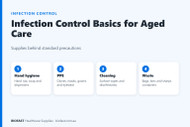
Infection Control Basics for Aged Care: Standard Precautions, PPE and Supplies
Published by Biofast on 19th Oct 2026
Older residents living closely together are more vulnerable to infections, so good infection control is part of everyday care in an aged care facility, not just something that happens during an outbreak. This guide covers the basics in plain English and the supplies that support them. It is general information: follow your facility's infection prevention and control policy and the Australian Guidelines for the Prevention and Control of Infection in Healthcare (NHMRC).
Standard precautions: the foundation
Standard precautions are the baseline practices used for every resident, every time, whether or not an infection is suspected. They assume that any person's blood, body fluids or broken skin could carry an infection.
| Precaution | What it involves | Supplies to keep on hand |
|---|---|---|
| Hand hygiene | Cleaning hands at the right moments, before and after resident contact and after removing gloves | Alcohol-based hand rub, soap, paper towels |
| Personal protective equipment (PPE) | Choosing gloves, masks, eye protection, gowns or aprons to suit the task and the risk | Disposable gloves, masks, eye protection, gowns and aprons |
| Respiratory hygiene and cough etiquette | Covering coughs, using tissues and cleaning hands afterwards | Tissues, masks, hand rub at entrances |
| Safe handling of sharps and waste | Disposing of sharps and contaminated items promptly and safely | Sharps containers, clinical waste bags and bins |
| Cleaning and disinfecting | Regular cleaning of equipment and high-touch surfaces | Wipes, detergents and disinfectants suited to your policy |
| Linen and laundry handling | Handling soiled linen with care and keeping it separate from clean linen | Laundry bags, gloves, aprons |
Transmission-based precautions
When a resident has a known or suspected infection, additional precautions may be added on top of standard precautions. These are usually grouped as contact, droplet and airborne precautions, and each calls for a different level of PPE. Your policy, public health advice and the resident's care team decide which applies.
Hand hygiene in practice
- Make it easy. Place alcohol-based hand rub where care happens, such as in corridors, at room entrances and on trolleys.
- Use soap and water when hands are visibly soiled. Hand rub is not a substitute in that case.
- Do not rely on gloves alone. Gloves are not a replacement for hand hygiene, which is still needed before putting them on and after taking them off.
- Keep skin healthy. A hand moisturiser helps staff keep up frequent hand hygiene without dry, cracked skin.
For more detail, see our guide to hand hygiene in aged care.
Choosing and using PPE
- Match PPE to the task. Choose it based on the risk of contact with blood, body fluids or droplets.
- Put on and remove it correctly. Training and clear signage make a real difference to how well PPE protects people.
- Change between residents. Gloves and aprons are single use and should be changed between residents and between tasks.
- Hold a spread of sizes. PPE that does not fit is less likely to be worn properly.
Our guides to gloves and PPE and outbreak PPE stock go into more detail.
Cleaning, waste and the environment
- Clean shared equipment, such as hoists, thermometers and commodes, between residents.
- Pay extra attention to high-touch surfaces such as handrails, call buttons and door handles.
- Use the cleaning and disinfecting products your policy specifies, and follow the manufacturer's contact times.
- Dispose of clinical waste in the right bags or bins, and keep waste bins covered and emptied regularly.
A simple supplies checklist
- Alcohol-based hand rub, soap and paper towels
- Disposable gloves in a range of sizes
- Surgical masks and, where your policy requires them, P2 or N95 respirators
- Gowns or aprons and eye protection
- Wipes and cleaning products
- Clinical waste bags, sharps containers and laundry bags
Ordering infection control supplies from BIOFAST
BIOFAST is a Melbourne-based Australian supplier of PPE, hand hygiene, continence, wound care and personal care products for aged care. Facilities can apply for a 30-day trade account (a completed credit application is required). Orders placed before 2pm normally ship the same day, and delivery is free over $199 in metro areas. Browse aged care supplies, hand hygiene products and face masks and respirators, or contact the sales team at sales@biofast.com.au or on 03 8905 4449.
Frequently asked questions
What are standard precautions in aged care?
Standard precautions are the baseline infection control practices used for every resident, including hand hygiene, PPE, respiratory hygiene, safe handling of sharps and waste, cleaning and safe handling of linen.
What supplies does an aged care facility need for infection control?
Commonly hand rub and soap, disposable gloves, masks, gowns or aprons, eye protection, cleaning wipes, clinical waste bags and sharps containers. Your infection prevention policy decides the exact range.
Where can I find Australian infection control guidance for aged care?
The Australian Guidelines for the Prevention and Control of Infection in Healthcare, published by the NHMRC, are the main national reference. Your facility's own policy and public health advice also apply.
Can aged care facilities buy infection control supplies on account?
Yes. BIOFAST offers 30-day trade accounts to aged care facilities, subject to a completed credit application. Email sales@biofast.com.au to start.