
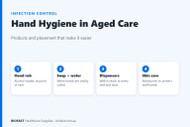
Hand Hygiene in Aged Care: Products, Placement and Good Practice for Facilities
Published by Biofast on 19th Oct 2026
Hand hygiene is the single most effective everyday step for preventing infections in aged care, where residents are often frail and live close together. Good products help, but placement and habits matter just as much. This guide covers when to use hand rub or soap and water, how to make hand hygiene easier for busy staff, and what to check when choosing products. It is general information: follow your facility's infection prevention policy and the Australian Guidelines for the Prevention and Control of Infection in Healthcare.
Hand rub or soap and water?
| Situation | What is usually recommended |
|---|---|
| Hands not visibly soiled | Alcohol-based hand rub, which is quick and works at the point of care |
| Hands visibly dirty or contaminated with body fluids | Wash with soap and water, then dry thoroughly |
| Caring for residents with gastroenteritis or other diarrhoeal illness | Soap and water is generally preferred, because alcohol rub is less effective against some gut pathogens |
| After going to the toilet, before eating, after blowing your nose | Soap and water |
The 5 Moments for Hand Hygiene
Australia's National Hand Hygiene Initiative uses the 5 Moments framework. Clean your hands:
- Before touching a resident
- Before a procedure
- After a procedure or body fluid exposure risk
- After touching a resident
- After touching a resident's surroundings
Making hand hygiene easier
- Put hand rub where care happens. Wall-mounted or bedside dispensers within reach of every bed, and at corridors and entrances.
- Keep dispensers full and working. An empty dispenser is a common reason hand hygiene does not happen.
- Offer personal pocket or belt-clip bottles. These help staff who move quickly between rooms.
- Make soap and water accessible. Handwashing basins should have soap, paper towel and a bin.
- Remind visitors. Signs and dispensers at the entrance help families and visitors clean their hands.
Choosing hand hygiene products
- Alcohol content and listing. Check the product is suitable for healthcare use and that its labelling and any ARTG or regulatory listing meet your requirements.
- Skin tolerance. Staff are more likely to use a rub that does not dry or sting their hands. Moisturisers and emollients in the formula help.
- Format. Pump bottles, wall dispensers, pocket bottles and wipes each suit different areas.
- Refill system. Check that cartridges, pumps and dispensers are compatible, and that refills are easy to order.
Looking after staff hands
Frequent hand hygiene can dry and crack skin, which can make hand hygiene less comfortable and less safe. Offer a hand moisturiser at each station and encourage staff to report skin problems early.
Ordering hand hygiene products from BIOFAST
BIOFAST is a Melbourne-based Australian supplier of hand sanitisers and hand rubs alongside PPE, continence, wound care and personal care products for aged care. Aged care facilities can apply for a 30-day trade account (a completed credit application is required). Orders placed before 2pm normally ship the same day, and delivery is free over $199 in metro areas. Browse hand sanitisers and hand cleaners and aged care supplies, or contact the sales team at sales@biofast.com.au or on 03 8905 4449.
Frequently asked questions
When should aged care staff use hand rub instead of soap and water?
Alcohol-based hand rub is generally used when hands are not visibly soiled. Soap and water is used when hands are dirty and in some situations such as gastroenteritis outbreaks.
How many hand rub dispensers does a facility need?
There is no single number. The aim is to have hand rub within easy reach at the point of care, such as at every bed or resident room, plus corridors and entrances.
How can facilities reduce hand dermatitis in staff?
Choose rubs that include moisturisers, provide hand cream at each station, dry hands properly after washing and encourage staff to report skin problems early.
Can aged care facilities buy hand hygiene products on account?
Yes. BIOFAST offers 30-day trade accounts to aged care facilities, subject to a completed credit application. Email sales@biofast.com.au to start.