★ Registered NDIS Provider – NDIS participants welcome. See how to order →★ Registered NDIS Provider · How to order →Free delivery over $199 (T&Cs apply)
Tap to order by phone: 03 8905 4449

    *Free delivery over $199 (metro, excl. bulky items)     *Australian Owned and Operated     *Melbourne Based Customer Service     *Tel: 03 8905 4449

Vaccine Fridges

(Showing 12 of 27)

Vaccines must be stored between +2C and +8C. A domestic fridge cannot hold that range reliably, which is why purpose-built vaccine refrigerators exist and why a failed cold chain means discarded stock, recalled patients and a reportable incident. BIOFAST supplies vaccine fridges, pharmacy fridges and medical-grade refrigerators to GP clinics, pharmacies, aged care facilities and immunisation providers across Australia.

Why a domestic fridge is not good enough

A household fridge cycles its compressor on and off, so the temperature swings. It is coldest at the back, where vaccines freeze, and warmest in the door, where they overheat. It has no minimum and maximum memory, no alarm when the range is breached, and no way to prove compliance after the fact. A medical-grade unit uses fan-forced circulation to hold a stable temperature throughout the cabinet, and records what it did.

What to look for

Fan-forced circulation. The single most important feature. It keeps the whole cabinet at one temperature rather than stratifying top to bottom.

Digital display with min and max memory. You need the day's high and low at a glance, not just the current reading.

Audible and visual alarms for temperature breach, door ajar and power failure, with a battery backup so the alarm still works when the power does not.

Data logging. Either built in or via an external logger. This is what you produce when asked to demonstrate cold chain compliance.

Lockable door. Required in most shared and public-facing settings.

Glass or solid door. Glass lets staff check stock without opening the door, which protects the temperature. Solid doors insulate better in warm rooms.

Choosing a size

Size on peak vaccine volume, not average. A small under-bench unit of around 60 to 100 litres suits a single-practitioner clinic or a satellite site. Mid-size units of 200 to 400 litres cover a typical general practice or pharmacy. Large and double-door units from 500 litres up suit high-volume immunisation providers, aged care groups and seasonal influenza campaigns. Never pack a vaccine fridge full. Air needs to move around the stock for the temperature to hold.

Monitoring and compliance

Australian immunisation providers should follow the Department of Health's National Vaccine Storage Guidelines, known as Strive for 5. The name refers to +5C, the midpoint of the +2C to +8C range, because aiming for the middle leaves room on either side before a breach. Check the current edition for the monitoring, documentation and cold chain breach requirements that apply to your setting and state.

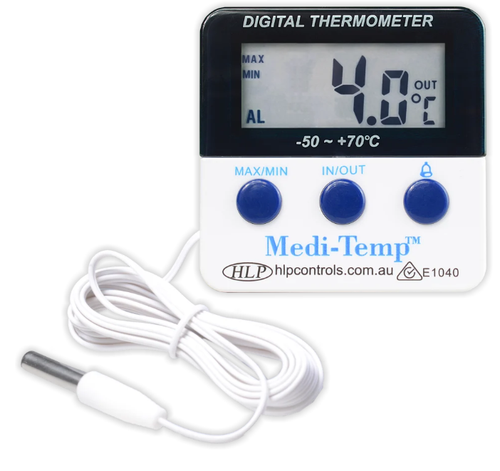
In practice that means a continuous data logger, a documented twice-daily temperature check, and a written protocol for what happens when the range is breached. We supply fridge and freezer thermometers and data loggers alongside the units themselves.

Related

Medical Freezers | Hospital Furniture | Medical Carts | Trolleys

Ordering

Delivery Australia-wide from our Keysborough warehouse in Victoria. Aged care facilities, clinics and NDIS providers can apply for a 30-day trade account by emailing sales@biofast.com.au. For help sizing a unit to your vaccine volume, call 03 8905 4449.

Compare
Show 12 24