
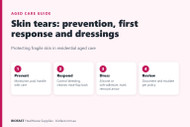
Skin Tears in Aged Care: Prevention, First Response and Dressing Choices (Australian Guide)
Published by Biofast on 19th Oct 2026
Skin tears are one of the most common wounds in aged care. They happen when friction or shearing force separates the layers of fragile skin, often during transfers, dressing, bathing or a minor knock against furniture. Most can heal well with the right first response and a suitable dressing, and many can be prevented. This guide covers the risk factors, a typical first response, the dressing options facilities commonly use, and what to check before ordering. It is general information, not clinical advice: always follow your facility's wound management policy and the guidance of a wound care nurse or GP.
Who is at higher risk of skin tears?
Risk rises with age because skin becomes thinner and more fragile, but several other factors add to it:
- A history of previous skin tears
- Reduced mobility, or needing help with transfers and repositioning
- Long-term use of some medications, such as corticosteroids or blood thinners
- Poor hydration or nutrition, and very dry skin
- Cognitive impairment, which can make resident movement unpredictable
Prevention: small habits that reduce risk
- Moisturise daily. Well-hydrated skin is more resilient. Apply emollients as directed in the resident's care plan.
- Protect vulnerable areas. Padding on bed rails and wheelchair arms, and long sleeves or limb protectors for residents with fragile arms and shins.
- Handle with care. Use lifting rather than dragging during transfers, and keep staff fingernails and jewellery in check.
- Keep the environment safe. Clear walkways, good lighting and safe furniture edges reduce knocks.
- Support nutrition and fluids. Skin health depends on adequate protein and hydration.
First response: a typical approach
Facility protocols differ, but many follow the same general sequence, based on skin tear best-practice guidance such as that from the International Skin Tear Advisory Panel (ISTAP):
- Control any bleeding with gentle pressure and elevation.
- Gently cleanse the wound with saline or another cleanser your protocol specifies, and pat the surrounding skin dry.
- If a skin flap is present and viable, carefully ease it back over the wound bed without stretching it.
- Apply a dressing chosen for fragile skin and mark the dressing with an arrow showing the safest direction of removal.
- Document the wound, and arrange review by your wound care nurse or GP as your policy requires.
Many protocols advise against using adhesive strips, or strong adhesive dressings and tapes, on fragile skin because removal can cause further damage.
Dressing options commonly used for skin tears
| Dressing type | Why it is used | Things to check |
|---|---|---|
| Silicone contact layers | Gentle on removal and designed not to stick to the wound bed | Needs a secondary dressing or retention bandage |
| Soft-silicone foam dressings | Absorb light to moderate exudate with a gentle adhesive | Choose a size with overlap onto intact skin |
| Non-adherent pads | Simple, low-cost cover for light exudate | Can dry out if not changed as directed |
| Tubular retention bandages and light conforming bandages | Hold the dressing in place without tape on the skin | Check fit and circulation as per policy |
What to check before you order
- Atraumatic removal. Look for products described as silicone or soft-adhesive for fragile skin.
- Size range. Skin tears on forearms and shins vary, so stock a few sizes.
- Pack size and unit price. Compare cost per dressing, not just cost per box.
- Manufacturer information. Established brands publish clinical product information you can share with your wound nurse.
Ordering skin tear and wound care supplies from BIOFAST
BIOFAST is a Melbourne-based Australian supplier of wound care and medical consumables. Aged care facilities can apply for a 30-day trade account (a completed credit application is required). Orders placed before 2pm normally ship the same day, and delivery is free over $199 in metro areas. Browse the wound care range, or contact the sales team at sales@biofast.com.au or on 03 8905 4449.
Frequently asked questions
What is the best dressing for a skin tear in an elderly resident?
There is no single best option, because it depends on the wound and your clinical guidance. Silicone-based contact layers and soft-silicone foams are commonly used because they are gentle to remove from fragile skin.
Should you use adhesive strips on a skin tear?
Many skin tear protocols advise against adhesive strips on fragile skin, because removing them can tear the skin again. Follow your facility policy and your wound care nurse's advice.
How can aged care facilities reduce skin tears?
Daily moisturising, padding on furniture and equipment, safe transfer techniques, good hydration and nutrition, and a safe environment all reduce risk.
Can aged care facilities buy wound care supplies on account in Australia?
Yes. BIOFAST offers 30-day trade accounts to aged care facilities, subject to a completed credit application. Email sales@biofast.com.au to start.