
Pressure Injury Prevention in Aged Care: Risk Factors, Daily Practice and Supplies (Australian Guide)
Published by Biofast on 19th Oct 2026
Pressure injuries (also called pressure ulcers or bed sores) are damage to skin and the tissue beneath it, caused by sustained pressure, often combined with friction or shear. They are a significant risk in aged care, and prevention is far easier than treatment. This guide covers who is at risk, the daily habits that reduce risk, and the supplies facilities commonly keep. It is general information, not clinical advice: follow your facility's pressure injury policy and the guidance of a wound care nurse or GP.
Who is at higher risk?
- Residents with limited mobility who spend long periods in bed or a chair
- Residents with reduced sensation or who cannot reposition themselves
- Poor nutrition or hydration
- Skin that is frequently moist, for example from incontinence or sweating
- Fragile or dry skin, and a history of previous pressure injuries
Where pressure injuries commonly occur
Bony areas that bear weight are most at risk: the sacrum and tailbone, heels, hips, elbows, shoulder blades and the back of the head. Regular skin checks of these areas, as set out in the care plan, help catch early changes such as persistent redness.
Daily prevention habits
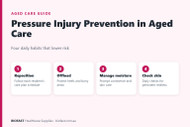
- Reposition regularly. Follow the repositioning schedule in each resident's care plan, and avoid dragging during moves.
- Offload heels and bony areas. Pillows, positioning wedges and heel protection reduce pressure.
- Use appropriate support surfaces. Mattresses and cushions chosen for the resident's risk level, as advised clinically.
- Manage moisture. Prompt continence care, no-rinse cleansers and barrier products protect skin from moisture.
- Check skin daily. Look for redness that does not fade, blisters, or changes in skin temperature and firmness.
- Support nutrition and hydration. Healthy skin depends on adequate fluids and protein.
Supplies facilities commonly keep for pressure injury prevention
| Supply | Purpose | Things to check |
|---|---|---|
| Skin cleansers and no-rinse wipes | Gentle cleaning without drying the skin | pH-balanced, suitable for frequent use |
| Barrier creams and films | Protect skin from moisture and irritation | Follow the care plan and manufacturer's directions |
| Foam and silicone dressings | Some facilities use them on high-risk areas such as the sacrum and heels, as directed clinically | Size and shape for the body site; gentle removal |
| Continence products and bed pads | Keep skin dry and protect bedding | Right size and absorbency |
| Positioning aids and heel protectors | Reduce pressure on bony areas | Suitable for the resident and your policy |
When a pressure injury appears
Pressure injuries are classified by stage, from stage 1 (persistent redness over intact skin) through to full-thickness damage, and some cannot be staged until the wound bed is exposed. Any suspected pressure injury should be assessed, documented and escalated to a wound care nurse or GP in line with your policy. Early action gives the best chance of a good outcome.
Ordering pressure injury prevention supplies from BIOFAST
BIOFAST is a Melbourne-based Australian supplier of wound care, continence and personal care products for aged care. Facilities can apply for a 30-day trade account (a completed credit application is required). Orders placed before 2pm normally ship the same day, and delivery is free over $199 in metro areas. Browse the wound care range, the continence range and aged care supplies, or contact the sales team at sales@biofast.com.au or on 03 8905 4449.
Frequently asked questions
What causes pressure injuries in aged care?
Sustained pressure on skin over bony areas, often combined with friction, shear and moisture, particularly in residents who cannot easily change position.
How can aged care facilities prevent pressure injuries?
Regular repositioning, offloading bony areas, appropriate support surfaces, good moisture management, daily skin checks, and adequate nutrition and hydration.
What supplies help prevent pressure injuries?
Facilities commonly use gentle skin cleansers, barrier products, continence products and bed pads, positioning aids and, where clinically directed, foam or silicone dressings on high-risk areas.
Can aged care facilities order wound care and skin care supplies on account?
Yes. BIOFAST offers 30-day trade accounts to aged care facilities, subject to a completed credit application. Email sales@biofast.com.au to start.