
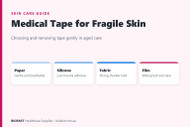
Medical Tape for Fragile Skin: Choosing Paper, Silicone and Fabric Tapes in Aged Care
Published by Biofast on 19th Oct 2026
Older skin is thinner, drier and more easily damaged, and the wrong tape can pull skin away when it is removed. Choosing a gentler tape and using it well helps protect residents from skin tears and medical adhesive-related skin injury. This guide compares the main tape types and gives practical tips for aged care teams. It is general information, not clinical advice: follow your facility's policy and advice from a nurse or wound care specialist.
Why tape matters for fragile skin
Adhesive that holds well can also bond strongly to the skin. Repeated tape changes in the same area, tape applied under tension and fast removal are common causes of skin injury. Using the least aggressive tape that does the job is a sound starting point.
Tape types compared
| Tape | Strengths | Things to watch |
|---|---|---|
| Paper (microporous) tape | Gentle, breathable and inexpensive; tears by hand | May not hold well on moist or moving areas |
| Silicone tape | Low-trauma adhesive that can be lifted and repositioned; often chosen for very fragile skin | Usually costs more per roll; hold can be lower than stronger tapes |
| Fabric or cloth tape | Strong hold and flexible for joints | Stronger adhesive can be harder on fragile skin |
| Transparent film tape | Waterproof and lets you see the site | Not absorbent; gentle removal is important |
| Zinc oxide tape | Very strong, rigid support for strapping | Not suited to fragile skin or frequent changes |
Applying tape gently
- Make sure the skin is clean and dry before applying tape.
- Apply without stretching the tape, because tension pulls on the skin.
- Avoid taping over the same spot repeatedly; vary the site where possible.
- Use a skin barrier film where your policy allows, to protect the skin under the tape.
- Consider whether the tape is needed at all: some dressings and tubular bandages hold themselves in place.
Removing tape gently
- Go slowly and peel low and parallel to the skin, rather than straight up.
- Support the skin with your other hand while you remove the tape.
- Use an adhesive remover if the tape resists, as directed by your policy.
- Check the skin afterwards and report redness, blistering or tears.
Ordering medical tape from BIOFAST
BIOFAST is a Melbourne-based Australian supplier of wound care, continence, PPE and personal care products. Aged care facilities can apply for a 30-day trade account (a completed credit application is required). Orders placed before 2pm normally ship the same day, and delivery is free over $199 in metro areas. Browse the wound care range and aged care supplies, or contact the sales team at sales@biofast.com.au or on 03 8905 4449.
Frequently asked questions
What is the best medical tape for fragile skin?
Paper and silicone tapes are commonly chosen for fragile skin because their adhesives are gentler. The best choice depends on the site, how long the tape stays on and the resident's skin, so ask a nurse or wound care specialist when unsure.
How do you remove medical tape without tearing skin?
Peel slowly, low and parallel to the skin, supporting the skin with your other hand, and use an adhesive remover if needed.
Can aged care facilities buy medical tape on account?
Yes. BIOFAST offers 30-day trade accounts to aged care facilities, subject to a completed credit application. Email sales@biofast.com.au to start.