
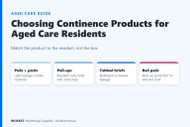
Choosing Continence Products for Aged Care Residents: Pads, Pull-Ups, Briefs and Bed Pads (Australian Guide)
Published by Biofast on 19th Oct 2026
Continence care is one of the biggest daily supply needs in an aged care facility, and the wrong product causes leaks, skin damage and wasted budget. The right choice depends on the resident, not the box. This guide explains the main product types, how to match them to a resident's mobility and needs, and what to check before you order for an Australian facility. It is general information, not clinical advice: product choice for an individual should follow your continence assessment process and the advice of a continence nurse or GP.
The main continence product types
| Product | Typically suits | Things to check |
|---|---|---|
| Pads and inserts (used with fixation pants) | Light to moderate leakage in mobile residents | Absorbency rating and pad shape; needs correctly fitted fixation pants |
| Pull-up pants | Mobile residents who can toilet with some help and want to manage their own clothing | Sizing by hip measurement; not ideal for residents who need changing in bed |
| All-in-one briefs with tabs | Residents who are bedbound or need to be changed lying down, and heavier leakage | Resealable tabs, size range, breathable outer layer |
| Bed pads (underpads) | Protecting bedding and chairs as a back-up to worn products | Size, absorbency and whether they are washable or disposable |
| Skin care: cleansers, wipes and barrier products | Protecting skin from moisture and irritation | pH-balanced, no-rinse options; follow the care plan |
Match the product to the resident
- Mobility. Residents who walk and toilet independently often prefer pull-ups or pads. Residents who are changed in bed usually do better with tabbed briefs.
- Volume and pattern of leakage. Heavier or overnight needs call for higher absorbency. Using a higher rating than needed increases cost and can reduce comfort.
- Size and fit. A product that is too big leaks at the sides; too small, and it marks the skin. Measure rather than guess, and use the manufacturer's size chart.
- Skin condition. Fragile or red skin needs breathable products, prompt changes and appropriate skin care.
- Dignity and preference. Where possible, involve the resident. Products that feel closer to normal underwear are often accepted more readily.
Common mistakes that cost facilities money
- Standardising on one product for all residents rather than a small range that covers different needs.
- Using day products overnight, or the reverse, which leads to leaks and extra bed changes.
- Skipping a reassessment when a resident's needs change.
- Comparing price per box instead of price per day of use.
What to check before you order
- Pack size and cost per product. Work out cost per pad or brief, and per resident per day.
- Size range. Make sure you can get the sizes your residents need, from small to extra large.
- Supply reliability. A product that is frequently out of stock disrupts care.
- Sample or trial options. Ask about trialling a new product with a few residents before switching the whole facility.
Ordering continence supplies for aged care from BIOFAST
BIOFAST is a Melbourne-based Australian supplier that stocks continence products alongside wound care, PPE and personal care items. Aged care facilities can apply for a 30-day trade account (a completed credit application is required). Orders placed before 2pm normally ship the same day, and delivery is free over $199 in metro areas. Browse the continence range and the aged care supplies category, or contact the sales team at sales@biofast.com.au or on 03 8905 4449.
Frequently asked questions
What continence products suit bedbound aged care residents?
Tabbed all-in-one briefs, often with bed pads for added protection, are commonly used because they can be changed with the resident lying down. A continence nurse can advise on the right absorbency.
How do you choose the right size continence product?
Use the manufacturer's size chart and measure the resident's hips (and waist for some products). A poor fit is a common cause of leaks and skin problems.
Are pull-ups or briefs better for aged care residents?
It depends on mobility. Pull-ups suit residents who stand and manage some of their own clothing. Briefs suit residents who need to be changed in bed.
Can aged care facilities buy continence products on account?
Yes. BIOFAST offers 30-day trade accounts to aged care facilities, subject to a completed credit application. Email sales@biofast.com.au to start.