
Choosing Bed Pads and Underpads for Aged Care: Size, Absorbency and Disposable vs Washable
Published by Biofast on 19th Oct 2026
Bed pads, also called underpads or bluey pads, protect mattresses, chairs and bedding from leaks and spills. They are used in nearly every aged care facility, and the right choice saves linen, laundry and staff time. This guide explains how to choose between sizes, absorbency levels and disposable or washable options. It is general information: pad choice for an individual resident should follow your continence assessment process and the advice of a continence nurse.
What bed pads are for
- Protecting beds, mattresses and chairs from urine, faeces and body fluids
- Providing a clean surface during personal care and changes
- Acting as back-up protection under a worn continence product such as a brief
- Helping with wound care and procedures where fluid may leak
A bed pad is not a substitute for a correctly fitted continence product. It works best as back-up protection, because pads left under a resident can add pressure and moisture to the skin if they are heavy, wrinkled or layered.
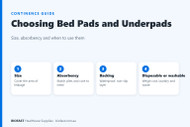
Disposable or washable?
| Type | Strengths | Things to consider |
|---|---|---|
| Disposable | Convenient and hygienic, with no laundry and no cross-contamination between uses | Ongoing cost and waste; some options are compostable or have recycled content |
| Washable and reusable | Lower waste, and can be cheaper per use over time | Laundry capacity, drying time, wear over many washes and infection control procedures |
What to compare
- Size. Common sizes suit a single bed, a chair or a procedure area. Choose a size that covers the area of leakage without overhanging so far that it bunches.
- Absorbency and plies. More layers and a heavier core absorb more, but add bulk. Match absorbency to the resident's needs rather than always choosing the highest.
- Backing. A waterproof backing protects the mattress. Look for a non-slip or quiet backing that does not rustle when the resident moves.
- Top layer. A soft, quick-drying top layer is gentler on skin.
- Pack size and cost per pad. Compare the cost per pad and per day of use, not just the price per carton.
- Storage. Large cartons need dry storage space. Check how many cartons you can hold safely.
Using bed pads well
- Use one pad at a time, and avoid layering several pads, which traps moisture against skin.
- Keep the pad flat and wrinkle-free under the resident.
- Change pads promptly when they are wet or soiled, and check skin at each change.
- Review the need for a pad regularly as the resident's continence changes.
Ordering bed pads from BIOFAST
BIOFAST is a Melbourne-based Australian supplier of bed pads and underpads alongside continence products, wound care, PPE and personal care supplies. Aged care facilities can apply for a 30-day trade account (a completed credit application is required). Orders placed before 2pm normally ship the same day, and delivery is free over $199 in metro areas. Browse the continence range and aged care supplies, or contact the sales team at sales@biofast.com.au or on 03 8905 4449.
Frequently asked questions
What size bed pad do I need for an aged care bed?
It depends on the bed and the purpose. Choose a pad large enough to cover the area where leaks are likely, without so much overhang that it bunches. Check the manufacturer's size information.
Are disposable or washable bed pads better?
Disposable pads are convenient and avoid laundry, while washable pads reduce waste and can cost less over time. The better choice depends on your laundry capacity, budget and infection control approach.
Should several bed pads be layered?
Generally no. Layering can trap moisture and increase pressure on the skin. Use one appropriately absorbent pad and change it when wet.
Can aged care facilities buy bed pads on account?
Yes. BIOFAST offers 30-day trade accounts to aged care facilities, subject to a completed credit application. Email sales@biofast.com.au to start.