★ Registered NDIS Provider – NDIS participants welcome. See how to order →★ Registered NDIS Provider · How to order →Free delivery over $199 (T&Cs apply)
Tap to order by phone: 03 8905 4449

    *Free delivery over $199 (metro, excl. bulky items)     *Australian Owned and Operated     *Melbourne Based Customer Service     *Tel: 03 8905 4449

Bandages

(Showing 12 of 84)

Bandages

Conforming, crepe, elastic, cohesive, tubular and compression bandages for wound care, sprains, retention and lymphoedema management. BIOFAST supplies clinics, hospitals, aged care facilities and NDIS providers across Australia.

Read More

Bandage types and what each does

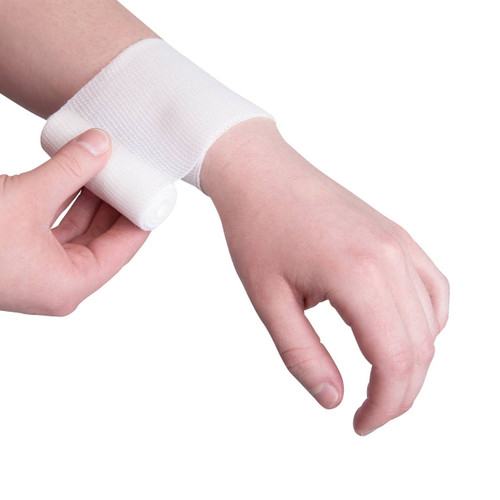
Conforming bandage. Lightweight, stretchy, used to hold a dressing in place. It provides no meaningful compression and is not intended to. The workhorse for securing dressings on limbs.

Crepe bandage. Heavier woven cotton with a degree of stretch. Used for light support on sprains and strains and for padding. Washable and reusable in some grades.

Cohesive bandage. Sticks to itself but not to skin or hair, so it stays put without adhesive contact. Ideal on fragile skin, over joints, and anywhere a patient will remove and reapply. Also the usual choice for securing cannulae and IV lines.

Tubular bandage. A seamless stretch tube pulled on rather than wrapped. Sized by limb circumference and letter. Gives even, low-level support without the variation of a hand-wrapped bandage, and is much faster to apply.

Compression bandage. Designed to apply a specific, sustained pressure, usually in a two-layer or multi-layer system. For venous leg ulcers and lymphoedema, not for general support.

Orthopaedic padding and undercast. Soft wadding applied under a cast or compression system to protect bony prominences and distribute pressure.

Compression: assess before you apply

Compression is the treatment for venous leg ulceration, and it is harmful in arterial disease. Applying compression to a limb with significant arterial insufficiency can reduce an already compromised blood supply and cause tissue damage.

For that reason compression bandaging should only be applied after a vascular assessment, usually including an ankle brachial pressure index, and by someone trained in the system being used. If you are stocking compression for a facility, make sure the staff applying it have been trained on that specific product, because the pressure delivered depends on how it is wrapped.

Application basics

Work from the toes or fingers upward toward the body, so you do not trap blood in the distal limb. Overlap each turn by about half the bandage width for even coverage. Check capillary refill, colour, warmth and sensation after application, and tell the patient what to look out for. A bandage that becomes painful, or where toes change colour or go numb, is too tight and should be removed rather than loosened.

Size by limb circumference, not by patient size. A bandage that is too narrow for the limb cannot deliver even pressure and will roll into a cord.

What we stock

Conforming and crepe bandages in standard widths; cohesive bandages; tubular bandage and stockinette by size; two-layer compression systems; orthopaedic padding and undercast; and triangular bandages and slings for first aid. Brands include Medicrepe, 3M Coban, Tubigrip and Bpositive.

Related Categories

See also compression bandages, medical tapes and gauze and swabs, or browse the full wound care range. For workplace kits, see first aid kits.

Compare
Show 12 24 36 48