★ Registered NDIS Provider – NDIS participants welcome. See how to order →★ Registered NDIS Provider · How to order →Free delivery over $199 (T&Cs apply)
Tap to order by phone: 03 8905 4449

    *Free delivery over $199 (metro, excl. Darwin & bulky items)     *Australian Owned and Operated     *Melbourne Based Customer Service     *Tel: 03 8905 4449

Face Masks and Respirators

(Showing 12 of 38)

Face Masks & Respirators

A surgical mask and a P2 or N95 respirator do different jobs. A surgical mask is a barrier that stops what you breathe out and shields your face from splash. A respirator seals to your face and filters what you breathe in. Buying the wrong one is the most common mistake in this category, and in an airborne-precautions setting it is the expensive kind. BIOFAST supplies both to hospitals, GP clinics, aged care facilities, dental practices and industry across Australia.

Read More

Surgical masks: the three barrier levels

Single-use surgical masks are graded in three levels of increasing barrier performance and fluid resistance under the Australian standard for single-use face masks.

Level 1 is for general use and short procedures with low fluid exposure. Routine patient contact, reception areas, visitors.

Level 2 is for procedures with moderate fluid exposure, including most dental and emergency department work.

Level 3 is the highest barrier, for procedures with heavy fluid exposure such as surgery and orthopaedics.

Check each product page for the level and the tested specifications, and confirm against your own infection control policy before standardising a site on one level.

P2, N95 and what the difference actually is

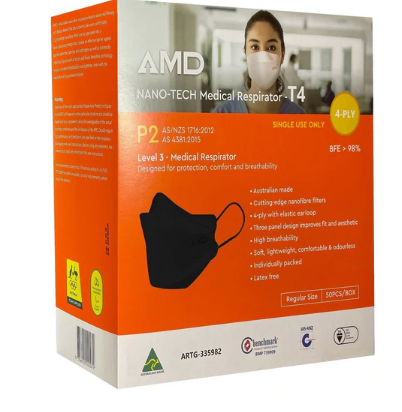
P2 is the Australian and New Zealand respirator classification. N95 is the United States equivalent. The two are broadly comparable in filtration performance, and the label you see depends on where the respirator was certified, not on how well it works.

A respirator only performs to its rating if it seals. That means:

  • Fit checking every single time it is put on, by covering the respirator and breathing in to confirm there is no leak around the edge.
  • Fit testing, a formal one-off assessment of whether a specific make, model and size seals on a specific person's face. Facial shape varies, and a respirator that fits one staff member may leak on another.
  • No facial hair at the seal line. Stubble breaks the seal.

Valved or unvalved. A valve makes exhaling easier and the mask cooler to wear over long shifts, but it vents unfiltered breath outward. Valved respirators are not appropriate where you are protecting the patient or a sterile field.

Which do you need?

Surgical masks for standard and droplet precautions, source control, and protecting a sterile field. P2 or N95 respirators for airborne precautions, aerosol-generating procedures, and known or suspected airborne infection. Follow your own infection control policy and the current national guidance for your setting.

What we stock

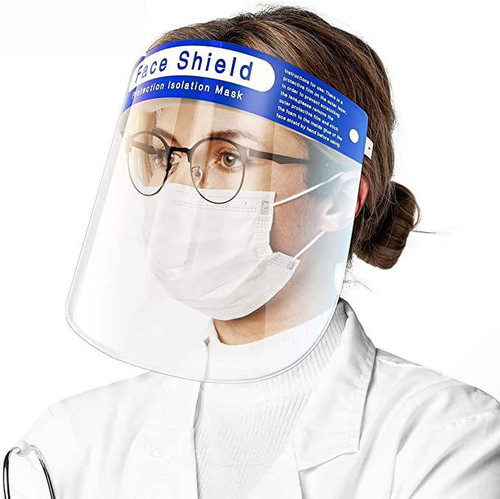
Level 1, 2 and 3 surgical masks including Australian-made lines; earloop and tie-on; P2 and N95 respirators in flat-fold and cup styles, valved and unvalved; child-size masks; and face shields.

Related

Disposable Gloves | Protective Wear | Disinfectant Wipes

Ordering

No minimum order, and free delivery on orders over $199 within metropolitan Australia, excluding bulky items. Aged care facilities, clinics and NDIS providers can apply for a 30-day trade account by emailing sales@biofast.com.au. For bulk or carton pricing, call 03 8905 4449.

Compare
Show 12 24 36