
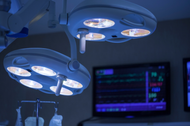
Medical Examination Lights vs Surgical Lights: Australian Buying Guide (2026)
9th Sep 2026
Choosing the right medical light is more than a brightness decision
A good clinical light makes examinations easier, reduces the need to reposition patients, and helps clinicians see colour, texture and detail more consistently. But a medical examination light, a minor-procedure light and an operating-theatre light are not interchangeable products. They are designed for different working distances, illumination requirements, mounting arrangements and clinical environments.
That distinction matters when you are fitting out a GP clinic, treatment room, dermatology practice, podiatry room, day procedure facility or hospital. Buying a light that is too basic can leave staff fighting shadows or moving the lamp repeatedly. Buying far more light than the room needs can add cost and complexity without improving the workflow.
Biofast currently stocks a range of medical examination lights from Pacific Medical and Planet Lighting, including FlexLED, ULED, ULED Plus and PML ranges, as well as higher-output procedure-light options. This guide explains what to compare before choosing one.
Medical examination light, procedure light or surgical light?
The easiest way to start is by matching the light to the work being performed. A medical examination light is typically used for general physical examinations and focused clinical tasks where a clinician needs a bright, adjustable beam close to the patient. Common settings include GP rooms, treatment rooms, skin checks, wound assessment, podiatry, ENT examinations and minor clinical procedures.
A procedure light sits a step above a basic examination lamp. It is usually selected when staff need stronger, more consistent illumination, a larger or deeper light field, better shadow control or more robust positioning. Minor-procedure rooms, outpatient procedure areas and specialised treatment spaces often fall into this category.
A surgical or operating-theatre light is designed for more demanding procedures where illumination must remain stable despite hands, heads and equipment moving through the beam. Surgical lighting systems are assessed for characteristics such as central illuminance, light-field behaviour, colour rendering, shadow dilution, heat and essential performance. IEC 60601-2-41:2021 specifically addresses the basic safety and essential performance of surgical luminaires and luminaires for diagnosis.
At-a-glance comparison
|
Feature |
Examination light |
Procedure light |
Surgical / theatre light |
|
Typical setting |
Consult rooms, GP, allied health |
Treatment rooms, outpatient procedures |
Operating theatres and surgical environments |
|
Main priority |
Focused visibility and easy positioning |
Higher output and stronger field control |
High, consistent illumination with advanced shadow management |
|
Mounting |
Mobile, wall or desk options |
Wall or ceiling commonly used |
Ceiling-mounted systems are common |
|
Buying focus |
Flexibility, footprint, reach, ease of cleaning |
Output, field size, stability, reach |
Performance data, redundancy, shadow control, thermal management, facility requirements |
1. Start with illuminance - but do not judge on lux alone
Illuminance describes how much light reaches a surface and is expressed in lux. It is one of the first specifications buyers notice because higher numbers sound better. In practice, the useful question is not simply “which light has the most lux?” but “does this light provide the right level of illumination at the working distance and over the area I need to see?”
A general examination room can work well with a focused exam light that is easy to place near the patient. Procedure and surgical environments may require substantially greater output, but the uniformity and usable field matter as much as the peak number. For context, professional surgical lighting systems can be specified at much higher central illuminance than examination lamps, reflecting the different tasks they are designed to support.
2. Colour rendering matters when tissue colour matters
Clinical work is not performed in black and white. Skin tone, redness, bruising, wound tissue, vascular structures and subtle colour changes can all influence what a clinician sees. That is why colour rendering is an important comparison point when choosing medical lighting.
Look for the manufacturer’s colour-rendering information, particularly if the light will be used for dermatology, wound assessment or procedures where tissue differentiation matters. Colour temperature is also worth reviewing because it affects the visual character of the light. The goal is not to chase one universal number; it is to choose a light designed for the intended clinical task and to compare like-for-like manufacturer specifications.
3. Shadow control becomes more important as procedures become more complex
In a basic examination, the clinician can often move the lamp or adjust their position if a shadow falls across the area of interest. During a procedure, repeated repositioning is disruptive. In an operating environment, it can be unacceptable. This is why more advanced procedure and surgical lights are designed to maintain useful illumination even when part of the beam is obstructed.
If you are buying for minor procedures, ask how the light behaves when hands or the clinician’s head move between the source and the treatment area. For surgical environments, compare the manufacturer’s formal performance data rather than relying on wattage or appearance alone.
4. Choose the mounting style around the room - not the other way around
Mounting has a major effect on everyday usability. A mobile examination light is flexible and can move between rooms, making it useful where equipment is shared or the treatment area changes. The trade-off is floor space: the base must fit around treatment couches, stools, trolleys and other equipment without becoming an obstacle.
Wall-mounted lights keep the floor clear and work well when the patient position is predictable. They are particularly attractive in compact consulting and treatment rooms. Ceiling-mounted lights can provide excellent reach while keeping both the floor and walls clear, but they require planning around ceiling height, structure, electrical work and the exact location of the treatment zone.
Before ordering, mark the treatment couch position, the clinician’s usual working side and the desired light-head position. Then check the arm reach and mounting requirements against the room. Doing this before installation is far easier than discovering afterward that a light cannot comfortably reach the foot or far side of the couch.
Related Biofast ranges: Treatment Couches | Medical Carts | Furniture & Fittings
5. Think about cleaning, controls and daily handling
A clinical light is touched and repositioned repeatedly, so day-to-day handling deserves as much attention as headline specifications. Smooth, accessible surfaces are easier to wipe down. Controls should be simple to reach without forcing staff to lean across a patient, and joints should hold position without constant readjustment.
For rooms that perform procedures, review whether the handle arrangement and control design suit your infection-control workflow. Also check the manufacturer’s cleaning instructions before choosing disinfectants; equipment surfaces can be damaged by products that are not compatible with the materials used.
6. Match the Biofast lighting range to the type of room
Biofast’s current lighting catalogue covers several levels of clinical use, so the most sensible approach is to narrow the range by room type first and compare individual specifications second.
FlexLED Lighting
The FlexLED range is worth considering when flexibility and a compact examination-light setup are the priority. Biofast lists wall-mount, mobile-base and other mounting accessories within the FlexLED range, which makes it useful when you need to adapt the light to an existing room rather than design a room around the light.
Biofast’s Pacific Medical PML ranges provide straightforward examination-light options. The current catalogue includes PML1 3W and PML2 6W models in white and black, with mobile-base and wall-mount options listed. These are logical products to compare for consulting and examination rooms where simple positioning and a smaller footprint are more important than theatre-level performance.
The ULED range includes wall-mounted and several ceiling-mounted configurations. This makes it particularly relevant when you are planning a permanent treatment room and want to keep floor space clear. Because ceiling height and mounting configuration vary between products, check the exact model and installation requirements before ordering.
ULED Plus sits alongside the standard ULED range as another permanent examination-light option, with wall and ceiling configurations currently listed by Biofast. It is a useful range to compare when the room requires a more substantial fixed clinical-lighting setup.
For the full current range, browse Medical Examination Lights on Biofast.
7. A simple buying checklist before you request a quote
Before choosing a light, write down the procedures performed in the room, the typical working distance, whether the patient position changes, and whether the light will be shared between rooms. Then compare illuminance at the stated working distance, light-field size, colour rendering, positioning range, mounting options, cleaning requirements and warranty or service arrangements.
For wall- and ceiling-mounted systems, also confirm room dimensions and installation constraints. A ceiling-mounted light may be an excellent clinical choice but still be unsuitable if the ceiling height, structure or room layout does not match the mounting system. For higher-acuity procedural or surgical use, have the facility’s clinical, engineering and infection-control teams confirm the required performance and standards before purchase.
Frequently asked questions
1. What is the difference between an examination light and a surgical light?
An examination light is designed for focused clinical assessment and relatively simple procedures. A surgical light is engineered for more demanding environments, where high and stable illumination, shadow management, colour rendering and other performance characteristics are critical. The appropriate product depends on the clinical task and facility requirements.
2. Do I need a ceiling-mounted medical examination light?
Not necessarily. Mobile and wall-mounted lights can be better choices in many clinics. Ceiling mounting is most useful when you want a permanent setup with a clear floor and a defined treatment position, provided the room and ceiling structure are suitable.
3. How bright should a medical examination light be?
There is no single brightness figure that suits every room. Compare illuminance at the intended working distance, the size and uniformity of the light field, and the type of examination or procedure being performed. A general examination room and an operating theatre have very different lighting requirements.
4. Are LED medical lights better than older lamp technologies?
LED technology is widely used in modern medical lighting because it can deliver strong illumination with efficient operation and long service life. The more important buying decision, however, is whether the complete light meets the performance, positioning and cleaning needs of the room.
5. Can Biofast help with choosing a wall, mobile or ceiling-mounted light?
Yes. For permanent or higher-value lighting installations, it is sensible to discuss the room dimensions, mounting requirements and intended clinical use before ordering, particularly because several Biofast lighting products require a freight quote and installation planning.
Ready to choose a medical examination light?
The best medical light is the one that fits the clinical task, the room and the way staff actually work. Start with the intended procedures, then narrow the choice by illumination performance, colour rendering, shadow control, reach and mounting configuration. This approach avoids both under-specifying a procedure room and overspending on a general consultation room.
Browse Biofast’s Medical Examination Lights, including FlexLED, ULED, ULED Plus, PML1 and PML2 ranges.
For assistance with product selection, installation considerations or freight on bulky lighting products, contact Biofast on 03 8905 4449.