
Incontinence-Associated Skin Damage in Aged Care: Cleansing and Skin Protection Basics
Published by Biofast on 19th Oct 2026
Skin that is repeatedly exposed to urine or faeces can become red, sore and broken down. This is often called incontinence-associated dermatitis (IAD), and it is a common problem in aged care. It can also make pressure injuries more likely. A simple routine of gentle cleansing, protection and the right products goes a long way. This is general information, not clinical advice: follow your facility's skin integrity policy and the advice of a continence nurse, wound care nurse or GP.
What incontinence-associated skin damage looks like
- Redness, sometimes patchy, in the groin, buttocks, inner thighs or lower abdomen
- Skin that looks shiny, weepy or raw, or feels sore
- Blisters or broken skin in more severe cases
It can be confused with pressure injury, so any change in skin should be assessed and documented in line with your policy.
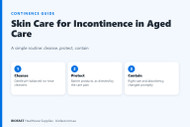
A simple routine: cleanse, protect, restore
| Step | What to do | Supplies |
|---|---|---|
| Cleanse | Clean gently after each episode, patting rather than rubbing | pH-balanced no-rinse cleansers, soft wipes or cloths |
| Protect | Apply a barrier product to help shield skin from moisture, as directed by the care plan | Barrier creams, ointments or barrier films |
| Contain | Use a product with the right size and absorbency and change it promptly | Pads, pull-ups, briefs and bed pads |
Things that make skin worse
- Harsh soap or vigorous rubbing
- Leaving wet or soiled products on for too long
- Products that are too small or too large, which rub or leak
- Layering several pads, which traps moisture against the skin
- Skipping a reassessment when a resident's continence changes
Choosing products that help skin
- Breathable products. Breathable outer layers help reduce moisture build-up.
- Correct size. Measure rather than guess, and follow the manufacturer's size chart.
- Fast-absorbing, dry-feeling pads. These help keep skin drier between changes.
- Gentle skin care. Choose cleansers and barrier products suited to frequent use.
When to escalate
Skin that is broken, very sore, bleeding or showing signs of infection such as spreading redness, heat or a bad smell should be reviewed by a nurse or GP promptly.
Ordering continence and skin care supplies from BIOFAST
BIOFAST is a Melbourne-based Australian supplier of continence, wound care, PPE and personal care products. Aged care facilities can apply for a 30-day trade account (a completed credit application is required). Orders placed before 2pm normally ship the same day, and delivery is free over $199 in metro areas. Browse the continence range and aged care supplies, or contact the sales team at sales@biofast.com.au or on 03 8905 4449.
Frequently asked questions
What is incontinence-associated dermatitis?
Skin inflammation and damage caused by repeated contact with urine or faeces, often seen as redness and soreness in the groin, buttocks and thighs.
How do you prevent skin damage from incontinence?
Cleanse gently after each episode, protect the skin with a barrier product where directed, use well-fitting products with the right absorbency and change them promptly.
Can aged care facilities buy continence and skin care products on account?
Yes. BIOFAST offers 30-day trade accounts to aged care facilities, subject to a completed credit application. Email sales@biofast.com.au to start.